
What to Do After a Semi-Truck Breakdown on the Highway
A semi-truck breakdown on the highway can become dangerous fast. The truck may lose power, overheat, blow a tire, or stop because of brake trouble. If this happens, move to a safe area if possible, turn on your hazard lights, stay away from traffic, and call for heavy-duty towing help. This guide explains what to do, what can cause the problem, and when to call All State Towing LLC for heavy-duty help.
Table of Contents
ToggleCommon Causes of Semi-Truck Breakdowns on Highways
A semi-truck can break down for many reasons. Some problems start small but get worse during long trips. Heavy loads, heat, rough roads, and old parts can put extra stress on the truck. Common causes include these problems.
- Low air pressure, worn tread, road debris, heavy cargo, or heat can cause a tire blowout.
- Weak brakes, air leaks, low air pressure, or hot brakes can make the truck unsafe to drive.
- Low oil, coolant leaks, fuel issues, broken belts, or old parts can cause engine failure.
- A weak battery, loose cable, or bad alternator can stop the truck from starting.
- Bad wiring, blown fuses, or sensor issues can cause power or light problems.
- Low fuel, bad fuel, or fuel system trouble can make the truck lose power.
- Bad trailer lights, tire damage, brake trouble, or a poor trailer connection can make the trailer unsafe.
What to Do When Your Semi-Truck Breaks Down on the Highway
A semi-truck breakdown on the highway can cause stress, but clear steps can help protect everyone. The driver should stay calm, move with care, and avoid risky choices near traffic. Keep reading to learn the key safety steps drivers should know after a semi-truck breaks down on the highway.
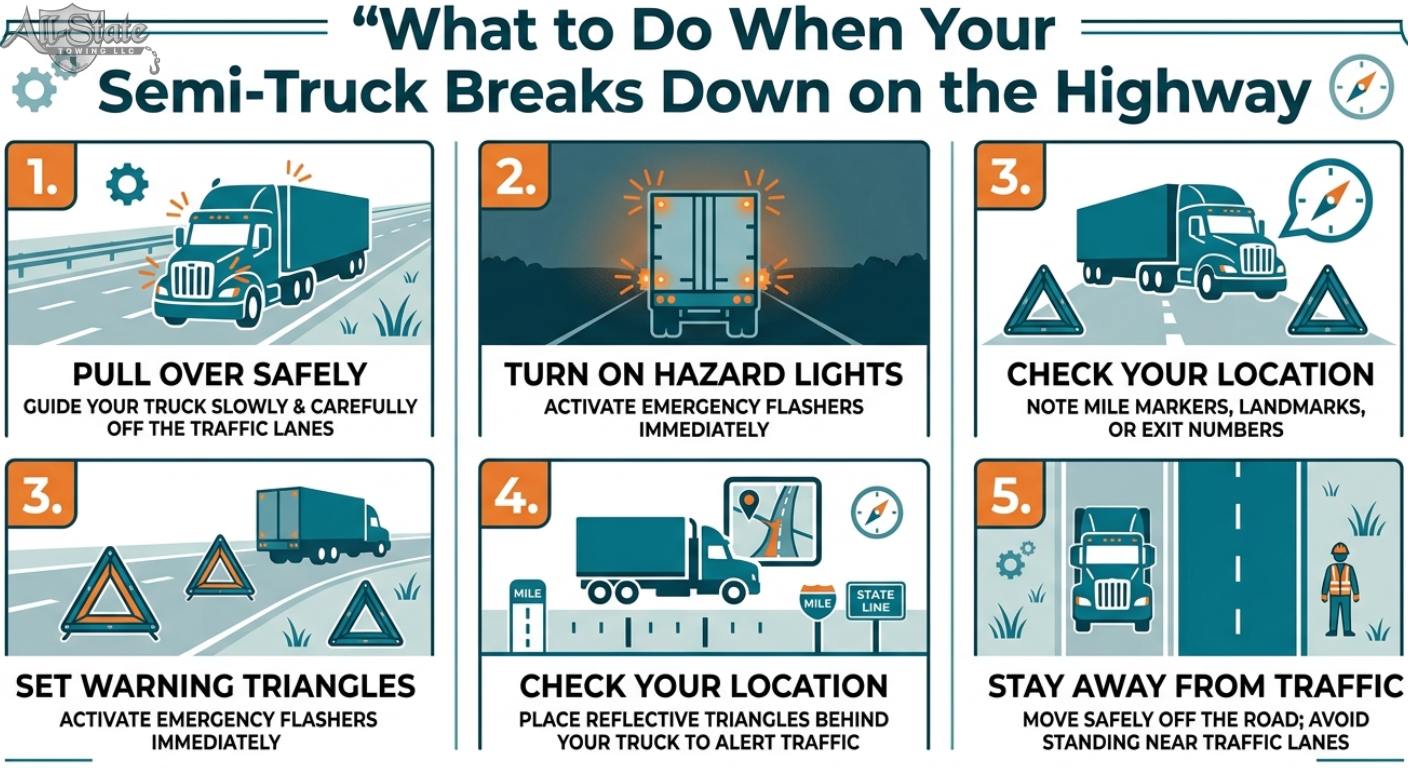
Pull Over Safely
Move the truck out of the travel lane if the truck still has power. Use the shoulder, exit ramp, wide pull-off area, truck stop, or safe lot. Do not make a sudden move across lanes. Use mirrors, watch traffic, and move with control.
Avoid a stop on a curve, hill, bridge, narrow shoulder, or blind spot if another safe place is close. These areas give other drivers less time to react. If the truck cannot move, keep it steady, turn on safety signals, and call for help.
Turn On Hazard Lights
Turn on the hazard lights as soon as the truck has trouble. Hazard lights help other drivers see that the truck has a problem. This step matters more at night, in rain, in dust, or near heavy traffic.
Keep the hazard lights on while the truck stays near the road. If the battery or lights fail, tell the towing company right away. This helps the tow operator understand the risk before arrival.
Set Warning Triangles
Place warning triangles only when it is safe to leave the cab. Warning triangles help other drivers see the disabled truck sooner. They also give traffic more time to slow down or change lanes.
Wear a safety vest if you have one. Watch traffic at all times. Do not stand close to moving cars or trucks. If the shoulder is too narrow or traffic passes too close, stay in a safer place and wait for trained help.
Check Your Location
Find your exact location before you call for service. A clear location helps the towing company reach you faster and bring the right equipment. Use the highway name, mile marker, exit number, direction of travel, cross street, nearby business, or GPS pin.
Also, tell the dispatcher where the truck sits. Say if it is on the right shoulder, left shoulder, exit ramp, live lane, dirt shoulder, or off the road. A clear report saves time and helps the heavy-duty towing team plan a safe approach.
Stay Away from Traffic
Traffic creates one of the biggest risks after a truck stops on the road. If the cab is safe, stay inside with your seatbelt on. This may protect you better than the shoulder. If the cab is not safe, move far away from the road. Stand behind a guardrail if one is close.
Do not stand between the truck and traffic. Do not stand behind the trailer, under the trailer, or near a damaged tire. Your safety matters more than the truck, cargo, or schedule. A truck can get repair. A driver cannot take that same risk.
Call Heavy Towing
A semi-truck needs a heavy-duty towing team. A small tow truck cannot safely handle a loaded tractor-trailer, big rig, diesel truck, bus, RV, or large commercial vehicle. Call heavy towing when:
- The truck cannot move safely.
- The truck blocks traffic.
- The truck has brake trouble.
- The truck loses air pressure.
- The engine fails or overheats.
- A tire blows out or has major damage.
- The truck gets stuck in dirt, mud, a ditch, or a tight spot.
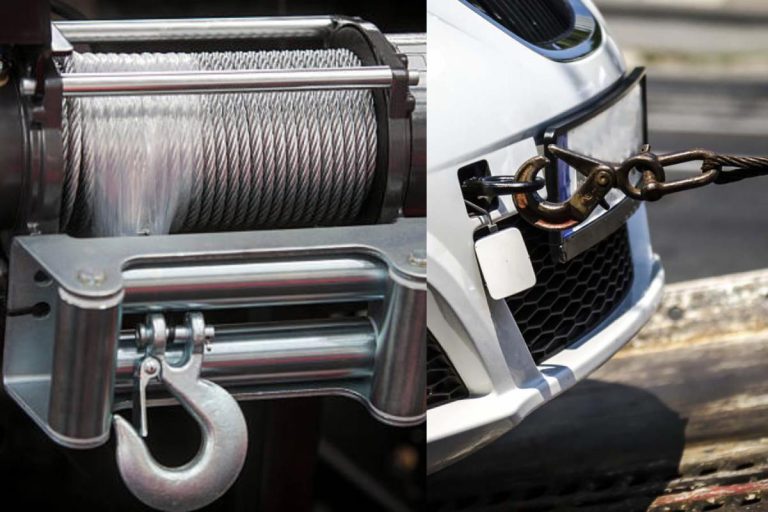
- The truck needs recovery or winching.
When you call, give clear details:
- Share your exact location.
- Give the truck type and trailer type.
- Say if the truck is loaded or empty.
- Explain the main problem.
- Mention smoke, leaks, tire damage, brake trouble, or road hazards.
All State Towing LLC can help with semi-truck towing, heavy-duty towing, winch outs, jump starts, fuel service, and recovery. Call us at 702-635-4052 for fast heavy-duty towing services in North Las Vegas.
How to Prevent Semi-Truck Breakdowns on the Road
You cannot prevent every semi-truck breakdown on the highway, but regular checks can lower the risk. Simple habits can help drivers avoid long delays, costly repairs, and unsafe roadside stops.
- Check tires before each route for low air pressure, cuts, bulges, nails, uneven wear, and weak tread.
- Replace bad tires early because heat, weight, and long trips can make tire damage worse.
- Test the brakes before the truck leaves and watch for weak brake feel, air leaks, or slow air pressure build-up.
- Check oil, coolant, and other fluids before each trip.
- Look under the truck for leaks because small leaks can lead to major engine damage.
- Test headlights, brake lights, turn signals, hazard lights, and trailer lights.
- Report strange sounds, power loss, hard shifts, or hot smells before the problem gets worse.
- Keep warning triangles, a safety vest, flashlight, gloves, phone charger, and basic tools in the truck.
Get Fast Semi-Truck Towing and Roadside Help
A disabled semi-truck can slow down your route and create a safety risk. It can also lead to extra costs if you do not get the right help fast. At All State Towing LLC, we help truck drivers, fleet owners, and commercial vehicle operators with heavy-duty towing and roadside service.
We can assist with semi-trucks, tractor-trailers, 18-wheelers, box trucks, buses, RVs, diesel trucks, and other large vehicles. Call us at 702-635-4052 for semi-truck towing, heavy-duty towing, recovery, fuel service, jump starts, and winch outs. With over 20 years of experience, we can help make the situation safer and move your truck with the right equipment.
Let’s Recap
A semi-truck breakdown on the highway can create danger fast, but the right steps can help protect the driver, the truck, and other people on the road. Safety should come first. Move the truck away from traffic when possible, use hazard lights, place warning triangles in a safe area, and share your exact location with the towing team.
If the truck cannot move safely, do not take risks near traffic or try major roadside repairs. Call a heavy-duty towing company with the right equipment for semi-trucks, trailers, and large commercial vehicles. Fast help can reduce delays, prevent more damage, and make the situation easier to handle.
FAQs
Should I stay inside my semi-truck after a breakdown?
Stay inside the cab if traffic is heavy and the cab is safe. Keep your seatbelt on. If the cab is unsafe, move far away from traffic and stand behind a barrier if one is close.
When should I call a heavy-duty towing company?
Call a heavy-duty towing company when the truck cannot move safely, blocks traffic, has brake trouble, loses air pressure, has tire damage, or has engine failure.
What information should I give the towing company?
Give the highway name, direction of travel, mile marker, exit number, truck type, trailer type, load status, and main issue. Tell the dispatcher if the truck sits on the shoulder, exit ramp, live lane, dirt area, or off the road.
Can I repair my semi-truck on the highway?
Avoid major repair near fast traffic. Simple checks may be safe in a wide and protected area, but a busy highway shoulder is dangerous. Call roadside help or heavy-duty towing when the truck cannot move safely.
Do I need towing or roadside assistance for a semi-truck breakdown?
The answer depends on the problem. Fuel service, a jump start, or minor roadside help may solve a small issue. Brake trouble, engine failure, major tire damage, trailer trouble, or unsafe truck placement may require semi-truck towing or heavy-duty recovery.