Light vs Heavy Duty Towing: The Differences

If you’ve ever broken down on I‑15, near Aliante, or even off Craig Road, you’ve probably wondered one thing: what kind of tow truck do I actually need? Do I need light duty vs heavy duty towing?
Choosing the right tow makes a big difference in safety, cost, and how fast you get back on the road. That’s why All State Towing LLC is here 24/7 with certified towing experts ready to help.
No matter what you’re driving, call our certified North Las Vegas towing experts (702) 635‑4052. Our services are available right now!
The Main Differences between Light vs Heavy Duty Towing
Each type of these towing services are for completely different types of vehicles, situations, and weight requirements. Understanding these differences helps you make the right call when you’re stuck on the road. Below are the major differences between light vs heavy duty towing:
Vehicle Types
Light towing handles:
- Cars and sedans
- Small and mid‑size SUVs
- Motorcycles
- Compact vans and pickup trucks
- Small fleet vehicles and work cars
Heavy towing handles:
- Semi‑trucks and tractor‑trailers
- Buses and RVs
- Box trucks and delivery trucks
- Construction machinery and equipment
- Large commercial fleet trucks
If it’s big, long, heavy, or designed for commercial work, it falls squarely under heavy duty.
Equipment Used
Light‑duty tow trucks rely on compact, fast‑deploying tools. Most drivers are familiar with:
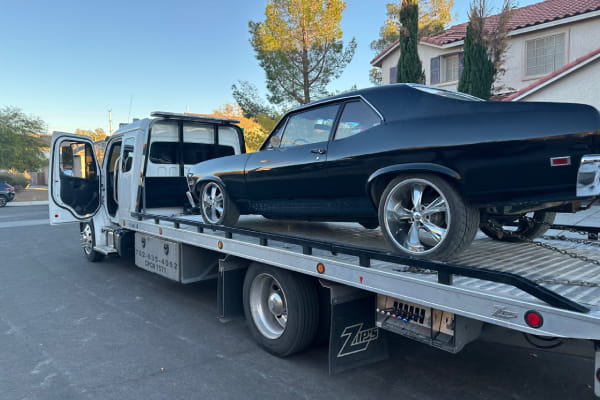
- Flatbeds (the safest option for most cars)
- Wheel‑lift systems
- Dollies for tight situations
Heavy‑duty equipment looks much more like industrial machinery. These trucks are designed to lift tens of thousands of pounds and manage complex recoveries. They often use:
- Integrated heavy wreckers
- Large rotators (massive cranes used in major recoveries)
- High‑capacity winching systems
- Air cushions for overturns
One quick way to tell the difference between light vs heavy duty towing in North Las Vegas:
- Light‑duty tow trucks look like trucks.
- Heavy‑duty tow trucks look like machines.
Towing Capacity
Capacity is the biggest dividing line between the two categories. Light‑duty towing generally covers vehicles under 10,000–12,000 lbs. This includes most personal vehicles and small work trucks.
Heavy‑duty towing starts at 26,000 lbs and goes upward. Loaded semis can exceed 80,000 lbs, which is why specialized equipment and trained operators are required.
If your vehicle is about the size of a normal car, it’s light duty. If it can pull a trailer, carry cargo, or transport passengers commercially, it’s almost always heavy duty.
Common Service Scenarios
Calls for light‑duty towing in North Las Vegas are the situations most drivers experience. These usually involve simple roadside issues or minor accidents, such as:
- A flat tire in a shopping center
- A dead battery outside a friend’s home
- Overheating on a hot North Las Vegas day
- A fender bender near a residential area
- Lockouts and quick roadside assists
Heavy‑duty scenarios are more specialized, and often larger scale. Examples include:
- Semi‑trucks broken down on I‑15
- RV or bus issues near Aliante or Speedway
- Construction equipment recovery from industrial zones
- Commercial delivery trucks stuck or disabled
- Rollovers requiring rotator recovery
The difference between light vs heavy duty towing is clear: light duty is everyday help; heavy duty handles major breakdowns and commercial traffic.
Operator Expertise
Light‑duty towing operators are trained to handle common vehicles safely and efficiently. They focus on damage‑free loading, quick troubleshooting, and roadside assistance skills.
Heavy‑duty operators go through additional, advanced training. They often hold specialized recovery certifications and understand CDL‑class vehicles, air brake systems, trailer connections, and high‑risk recovery procedures. When dealing with large trucks or equipment, operator skill matters just as much as the machinery used.
Response Time and Logistics
Light‑duty towing is fast. These trucks move easily through neighborhoods, parking lots, and city streets. They can be deployed quickly and start working almost immediately.
Heavy‑duty towing requires more coordination. The equipment is larger, the preparation is stricter, and the route planning must account for weight, dimensions, and traffic. These calls often involve longer travel times, especially when responding to industrial corridors or highways.
In simple terms:
- Light duty = flexible and fast.
- Heavy duty = strategic and powerful.
Cost Difference
Light‑duty towing is typically more affordable. You’re paying for standard equipment, one operator, and quicker jobs.
Heavy‑duty towing requires:
- Larger trucks
- More specialized operators
- Complex handling
- Often more time onsite
Because of this, heavy‑duty services cost more, but they also prevent far more damage and risk in the long run.
Light vs Heavy Duty Towing Differences in a Nutshell
| Category | Light Duty Towing | Heavy Duty Towing |
| Vehicle Types | Cars, SUVs, motorcycles | Semis, RVs, buses, heavy trucks |
| Equipment | Flatbed, wheel‑lift | Rotators, heavy wreckers |
| Weight Capacity | Under 12,000 lbs | 26,000+ lbs |
| Common Situations | Flat tires, small accidents, lockouts | Highway breakdowns, commercial recovery |
| Response Time | Quick | Coordinated |
| Cost | Lower | Higher |
| Operator Skill | Standard tow training | Heavy recovery certified |
Why the Right Tow Type Matters
Using the right tow type matters because using the wrong one can damage the vehicle, create safety risks, and slow everything down. If a tow truck isn’t rated for the vehicle’s weight, it can bend the frame, strain the suspension, or damage the drivetrain. It can also make the tow unstable, causing swaying, poor braking, or equipment failure.
When the wrong truck shows up, the recovery often has to be stopped and restarted with proper equipment, wasting time and keeping the vehicle, or even an entire lane, stuck longer than necessary. In some cases, it also ends up costing more because a second service or repairs become necessary.
Choosing the correct tow type prevents damage, avoids unsafe situations, and gets the recovery done efficiently.
Light and Heavy Duty Towing Services in North Las Vegas, NV
Both types of towing are important, but they serve different purposes. Light‑duty towing helps everyday drivers get out of tough spots. Heavy‑duty towing keeps commercial routes, RV travelers, and industrial traffic moving safely.
Whatever you drive, for fast, dependable services, you need find a trusted towing company in North Las Vegas with experts who know the area and respond 24/7.
At All State Towing LLC, we offer roadside‑assistance, towing, fuel delivery, tire changes, and emergency recovery. We have the right truck, right tools, and right team for the job.
Contact us anytime:
- Address: 3365 W Craig Rd, North Las Vegas, NV 89032
- Phone: (702) 635‑4052
FAQs
Light‑duty towing handles regular cars. Heavy‑duty towing handles large commercial or oversized vehicles.
Vehicles over 26,000 lbs such as semis, RVs, buses, and large trucks.
Cars, SUVs, vans, small pickups, and motorcycles.
If it’s a regular passenger vehicle, it’s light duty. If it’s large, commercial, or oversized, it’s heavy duty. When in doubt, call us—we’ll tell you instantly.
Yes. It requires bigger equipment and specialized operators.
Yes. Our heavy‑duty fleet handles RVs, buses, and commercial vehicles.
Yes, All State Towing LLC is available 24/7, every day of the year.